The Machine on Your Face
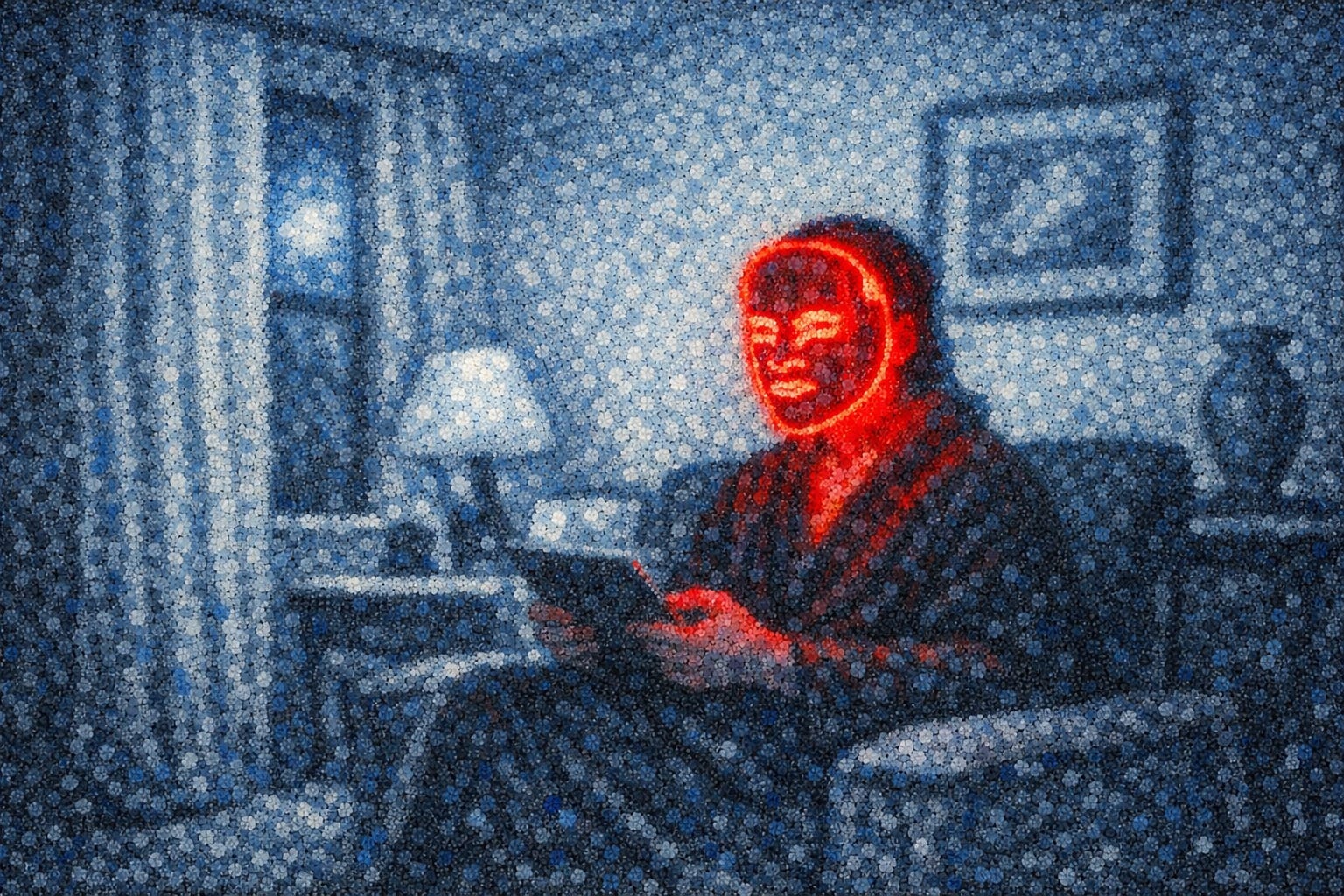
The device looks like a prop from a science fiction film. You strap it on. It glows red. You sit for ten minutes looking vaguely like a villain in a mid-budget Marvel production. This is the state of modern skincare.


LED masks have moved from dermatology offices into bathroom cabinets across the country. The market is crowded. The claims are outsized. Most consumer wellness products do not survive contact with peer-reviewed literature. These mostly do.
What the Light Actually Does
The mechanism is not magic. It is mitochondria – the so-called “engine” powering the inside of every cell. When red light at 633 nanometers hits the skin, it is absorbed by an enzyme called cytochrome c oxidase — a key driver of cellular metabolism. That enzyme has been partially blocked by a substance called nitric oxide, a byproduct of stress and aging. The light displaces it. The enzyme works again. Cellular energy rises. Cells repair themselves.
Near-infrared light at 830 nanometers goes deeper still, reaching the structural fibroblasts that produce collagen and elastin. These are the cells that determine whether your skin holds its architecture. The light reminds them what they are supposed to do. The better masks add 1072-nanometer deep infrared, targeting the subcutaneous layers where structural sagging begins.
The Numbers Are Real
A three-month clinical trial using a 630-nanometer mask found crow’s feet wrinkle depth improved by 38%. Dermal density — the thickness and structural integrity of the skin itself — improved by nearly 48%. A randomized, double-blind, placebo-controlled trial showed that 86% of participants in the active group getting the LED treatment improved in crow’s feet wrinkles. The placebo group did not. The improvements in dermal density persisted for 28 days after treatment ended. That matters.
The effect is not placebo. It is photons.
The Economics Are Simple
Professional LED sessions cost between $50 and $300 each. A standard clinical protocol requires 10-12 sessions. That is up to $3,600 before visible results. Maintenance adds another $600 to $3,600 per year. Over five years, you can spend… a fair amount of money.
A good at-home mask costs around $400. It lasts years. Cost per session, amortized across a thousand uses, is less than 50 cents. The return on investment arrives within the first few weeks of consistent use.
You May Be Able to Use Pre-Tax Dollars
It is worth knowing that HSA and FSA funds may be an option here. The IRS requires that eligible purchases treat or manage a specific medical condition rather than serve a purely cosmetic purpose — so buying a mask to address acne, chronic inflammation, or a skin disorder like eczema will put you on firmer ground than buying one solely for wrinkle reduction. A Letter of Medical Necessity from your healthcare provider is often what bridges that gap, formally documenting the therapeutic intent. For those who qualify, paying with pre-tax dollars can mean savings of up to 30%. It is not guaranteed, but it is worth considering before you pay full price out of pocket.
The Limits
None of this is surgery. The light cannot reposition fat pads or tighten sagging muscle. Severe structural aging requires a surgeon. The photons cannot fix that.
The therapy follows what biologists call the Arndt-Schulz Law. The dose-response curve is shaped like a bell. Too little light and nothing happens. Too much and the cells shut down. Wearing the mask for an hour instead of ten minutes does not accelerate results. It reverses them. Consistency matters more than intensity.
People with melasma need caution, which is really Latin for “don’t do this.” Even though LEDs are cold light sources, a contact mask can trap warmth against the skin. That warmth can trigger melanocytes. The melasma pigmentation gets worse or comes back. For certain skin types the risk is real.
What to Do
Buy an FDA-cleared device. Use it 3-5 times per week. Keep your eyes closed. Start on clean, bare skin. Do not use retinol right before a session. Do not use it intermittently and expect results.
Expect nothing dramatic in the first month. Expect something real by the third. The red light will help, try to be patient.
If you are considering getting one of these, the New York Times Wirecutter has done the legwork on specific devices — testing, ranking, and cutting through the noise. Their guide to the best devices is a good place to start (link: www.nytimes.com/wirecutter/reviews/best-red-light-therapy-skin-care-device).
If you have questions about how a mask might fit into a broader skincare routine, give us a call.
SoCal OncoPlastic Surgery in Newport Beach, California