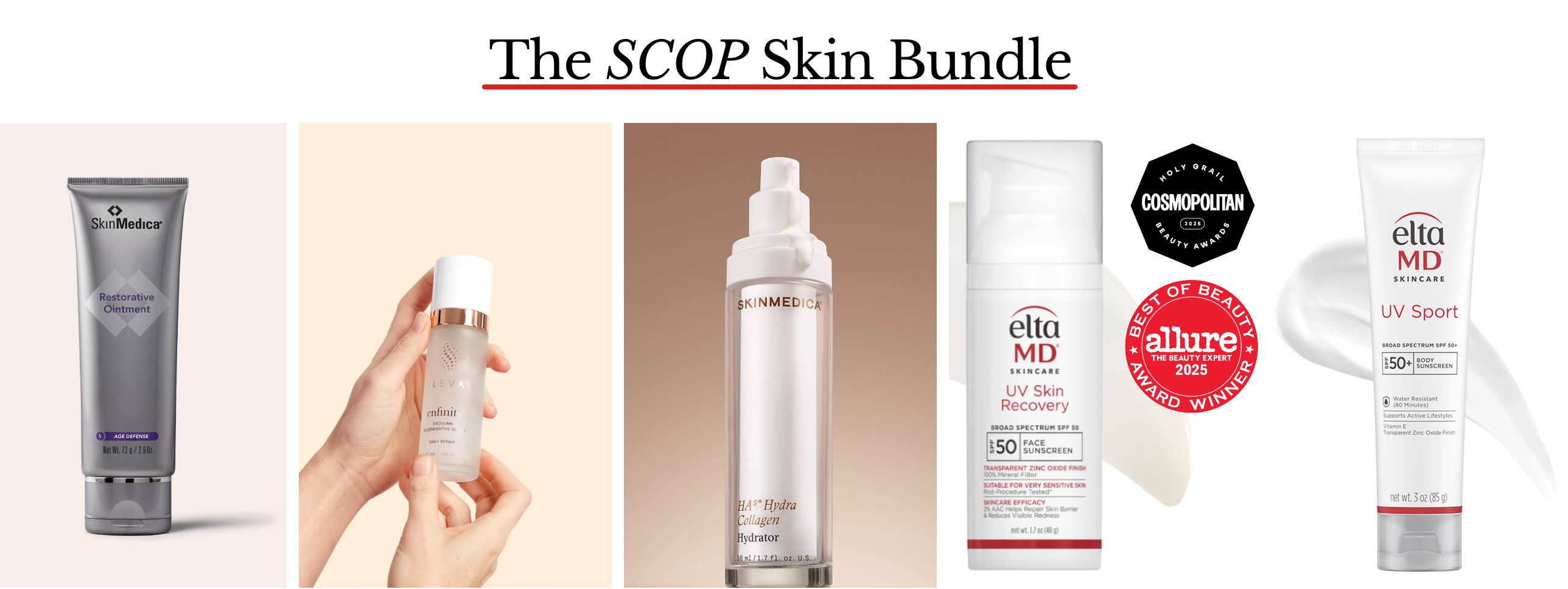
Your Dark Spots Have Six Enemies Now
Did skincare figure out how pigmentation actually works? Here’s what that means for your face.

The old way was simple. You rubbed hydroquinone on the spot. The spot faded. You stopped. The spot came back. This happened to millions of people, over and over. It was not treatment. It was delay.
What Science Finally Got Right
Here is what researchers now understand about hyperpigmentation: it is not one problem. It is six. Melanin — the pigment responsible for sun spots, melasma, and the shadows left behind by acne — doesn’t just appear. It gets triggered by UV radiation and inflammation. Then it gets synthesized by an enzyme called tyrosinase. Then it gets bundled into tiny sub-cellular packages called melanosomes. Then it travels, transferring to the surface. And finally it persists there, until your skin turns over and sheds it away.
Six stages. Six points of failure. Most treatments historically addressed one, maybe two.
That gap explains why melasma returns after summer, why post-inflammatory hyperpigmentation lingers for months after a blemish heals, why hydroquinone, despite being the clinical gold standard for decades, leaves patients cycling through flare-ups the moment they stop using it. Hydroquinone inhibits tyrosinase and kills pigment-producing cells. Powerful. But it ignores the five other stages entirely. It also carries real risks: burning, skin barrier damage, and in prolonged use, a permanent blue-black discoloration called exogenous ochronosis that is worse than the original problem.


The New Playbook
Three ingredients now form the backbone of modern brightening formulas, and they work differently enough from each other that combining them is almost always the point.
Tranexamic acid blocks the inflammatory pathway. UV exposure triggers keratinocytes to produce plasminogen activator, which creates plasmin, which floods the skin with prostaglandins — potent signals to make more pigment. Tranexamic acid cuts that chain. Randomized trials show it matches 4% hydroquinone on Melasma Area and Severity Index scores while producing fewer adverse reactions. It is not glamorous chemistry. It works.
Niacinamide — or Vitamin B3 — operates differently. It does not stop melanin from being made. It stops melanin from being delivered. Melanosomes form, travel, reach the boundary between melanocyte and keratinocyte, and then niacinamide blocks the handoff. It also rebuilds the skin’s lipid barrier. It is doing two jobs quietly.
Vitamin C attacks the tyrosinase enzyme itself, binding to its core and preventing the reaction that drives the melanin synthesis. It also neutralizes the free radicals that UV radiation and pollution deposit daily. It keeps the skin from losing ground.
Three Products, Three Philosophies
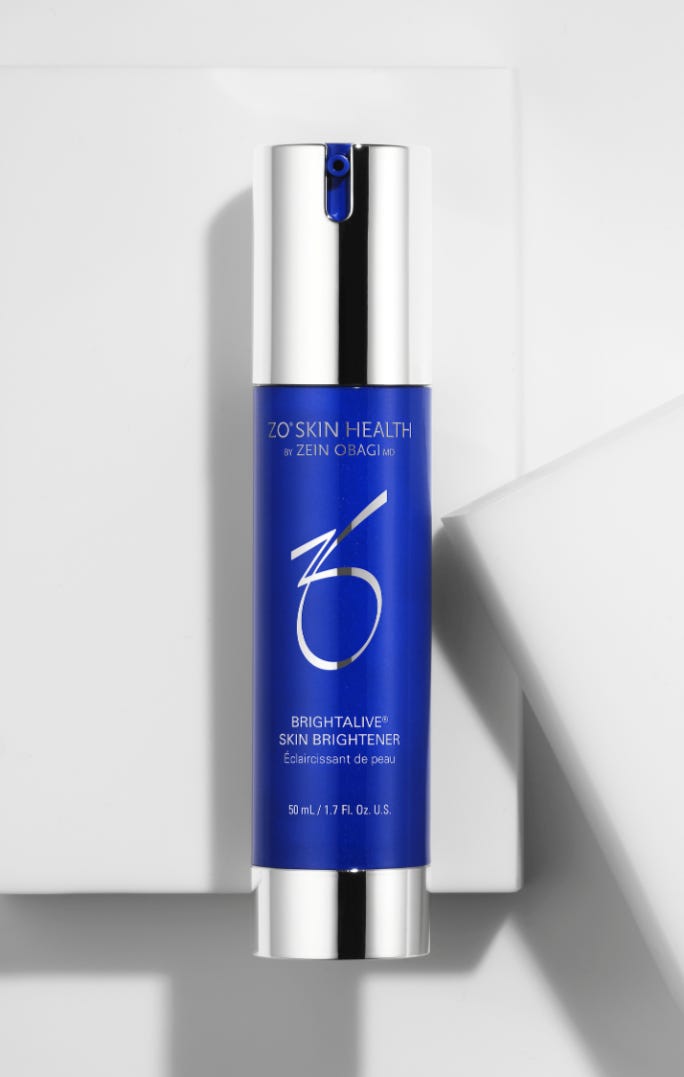
ZO Skin Health’s Brightalive runs tranexamic acid and niacinamide through what the company calls an “Intelligent Peptide Drone system,” encapsulated delivery designed to protect the active ingredients. A 16-week clinical study across 50 subjects showed a 47% improvement in pigmentation and 52% improvement in overall skin quality.
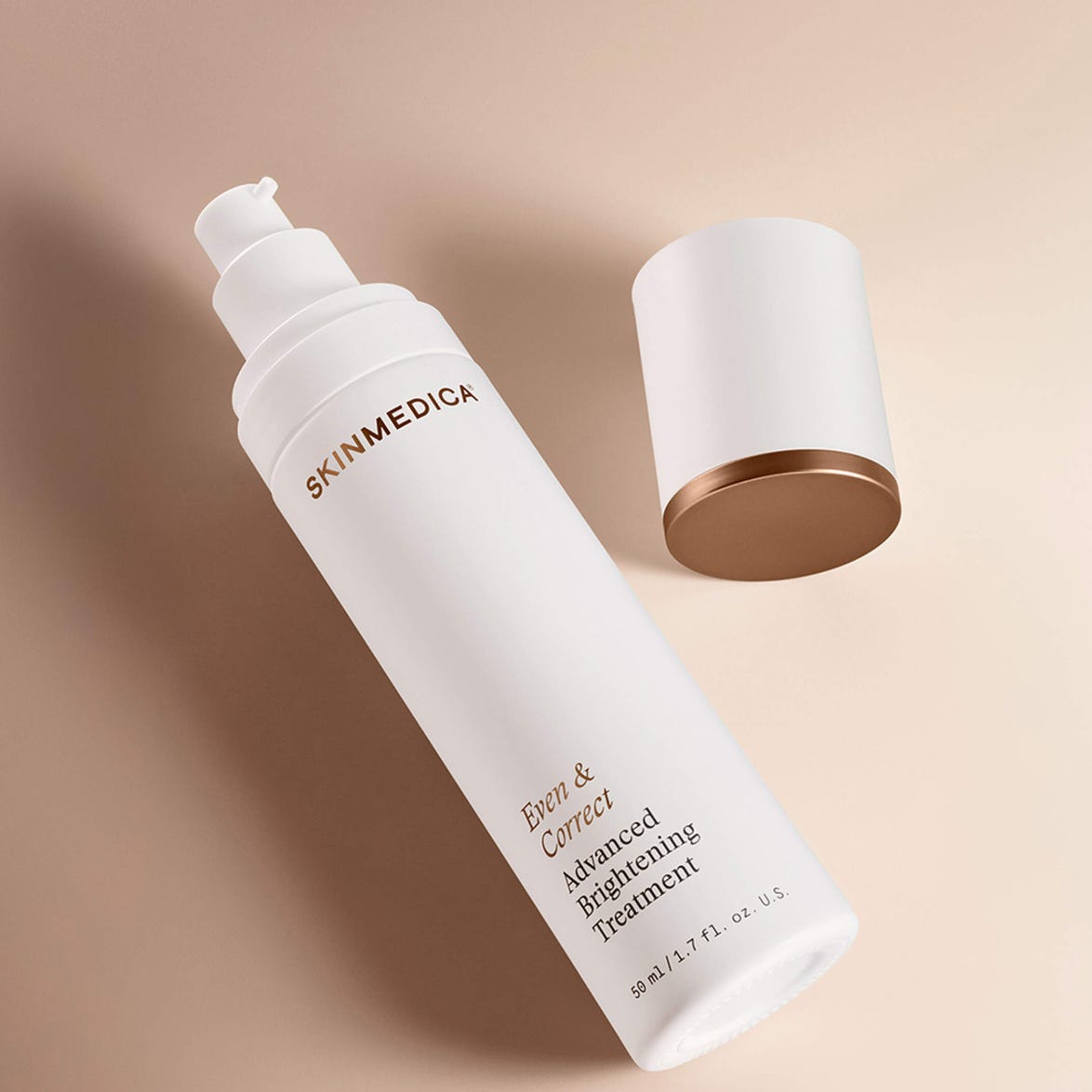
SkinMedica’s Even & Correct goes broader. Its 9% LTN Complex targets all six melanogenesis pathways using lotus sprout extract, tranexamic acid, and niacinamide. In trials, 83% of users reported improved skin tone evenness by week eight.
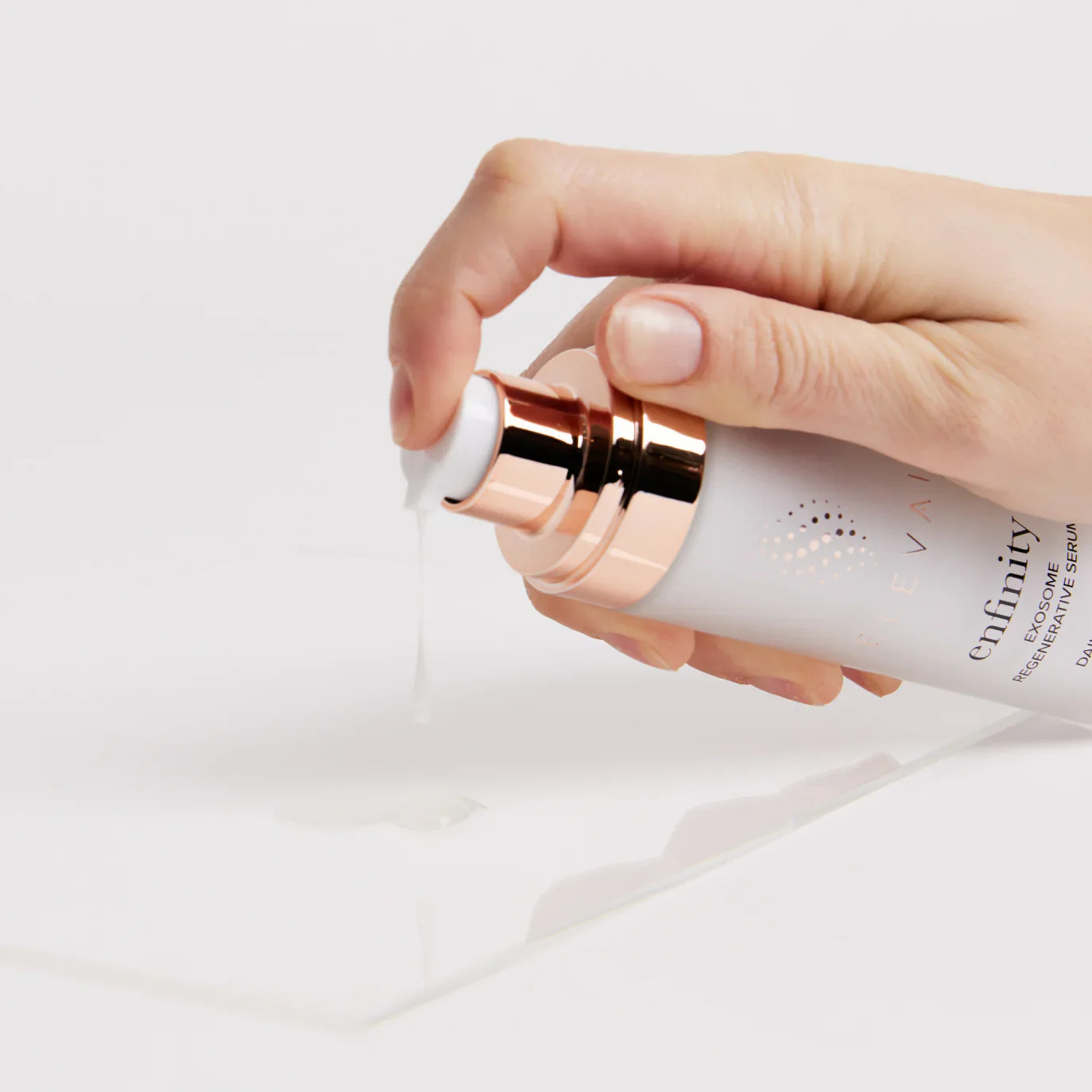
Elevai Enfinity bets on something different altogether: exosomes. Derived from human umbilical cord stem cells, these nano-vesicles carry growth factors — EGF, FGF, TGF-β — that signal the skin to repair and regulate itself rather than simply blocking enzymes. The formula also layers four different forms of stabilized Vitamin C on top of that regenerative base, so it addresses synthesis through conventional chemistry while the exosomes work at a deeper cellular level. Melasma patients in preliminary studies showed significant improvement with no recurrence at six months.
The Part That Does Not Change
None of it works without sunscreen. UV radiation is the primary trigger. Everything else is downstream. SPF 30 or higher, with iron oxides for visible light protection. Daily. Multiple times each day. Without exception.
The science got more sophisticated. The discipline required did not.
Know What’s In Your Products
None of this matters if you don’t know what you’re actually using. Labels are dense. Marketing is louder than ingredient lists. And the difference between a product that addresses two pathways and one that addresses six is not always obvious from the packaging.
At SoCal OncoPlastic Surgery, we review your existing skincare regimen and make recommendations based on what your skin actually needs — not what sounds good. Medical-grade products, chosen correctly, are an investment. We make that easier: all of our medical-grade skincare is 25% off MSRP, every day.